Do you struggle with understanding the difference between similes and metaphors? You’re not alone! Many students find these literary devices confusing. But fear not, we’re here to help break it down for you in a simple and fun way.
Similes and metaphors are both figures of speech used to make comparisons, but they do so in different ways. A simile uses “like” or “as” to compare two things, while a metaphor directly states that one thing is another. Understanding the distinction can help you become a more effective writer and reader.
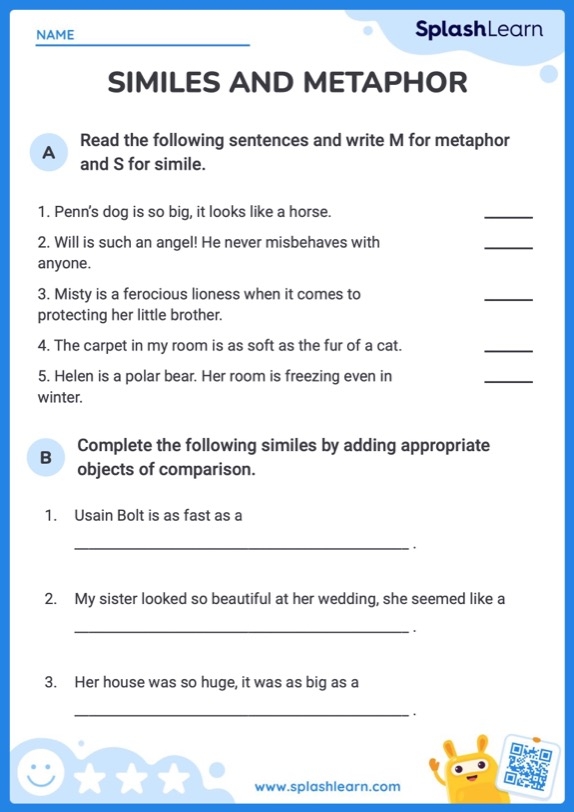
simile and metaphor worksheet
Simile and Metaphor Worksheet: Practice Makes Perfect
To get a better grasp on similes and metaphors, try completing a worksheet with various examples of each. This hands-on practice will allow you to see the differences between the two types of comparisons and how they enhance the meaning of a sentence or passage.
As you work through the worksheet, pay attention to how similes and metaphors create vivid imagery and evoke emotions in the reader. By identifying and analyzing these literary devices, you’ll develop a deeper appreciation for the power of language and how it can transform ordinary writing into something extraordinary.
Don’t be discouraged if you find similes and metaphors challenging at first. Like any skill, practice is key to improvement. With patience and persistence, you’ll soon be able to spot these literary devices in your favorite books and use them effectively in your own writing.
So grab a pen and get ready to dive into the world of similes and metaphors with our worksheet. Before you know it, you’ll be using these literary tools like a pro and adding depth and creativity to your writing. Happy practicing!
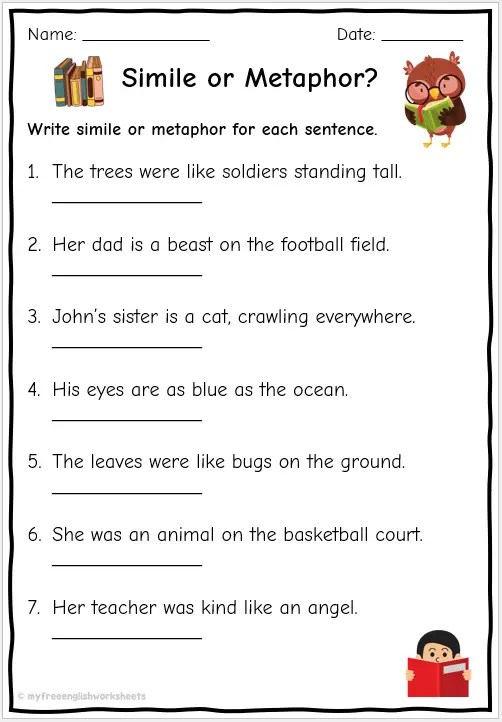
Similes And Metaphors Worksheets Engaging Exercises For Figurative
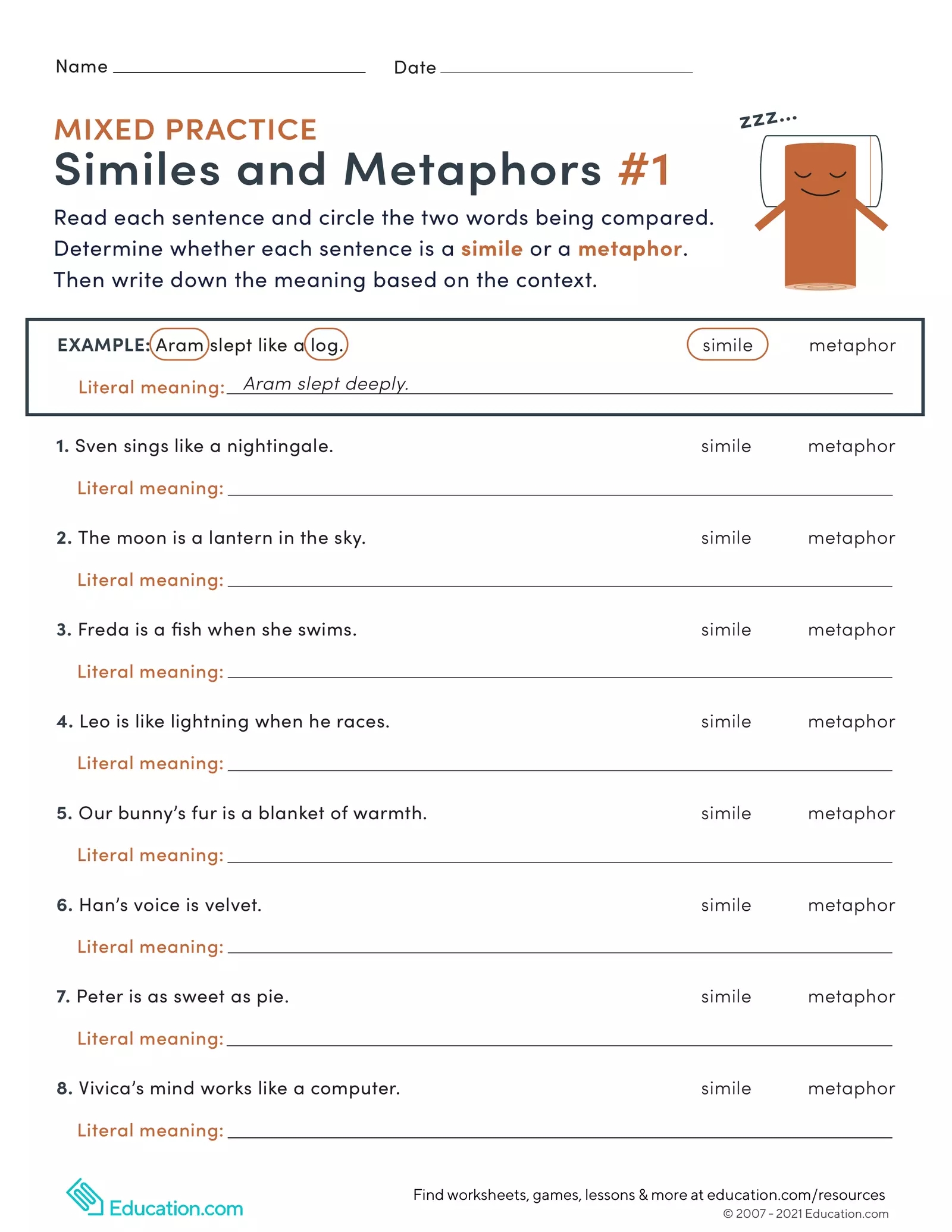
Rewrite Similes And Metaphors Worksheets K5 Learning Worksheets Library
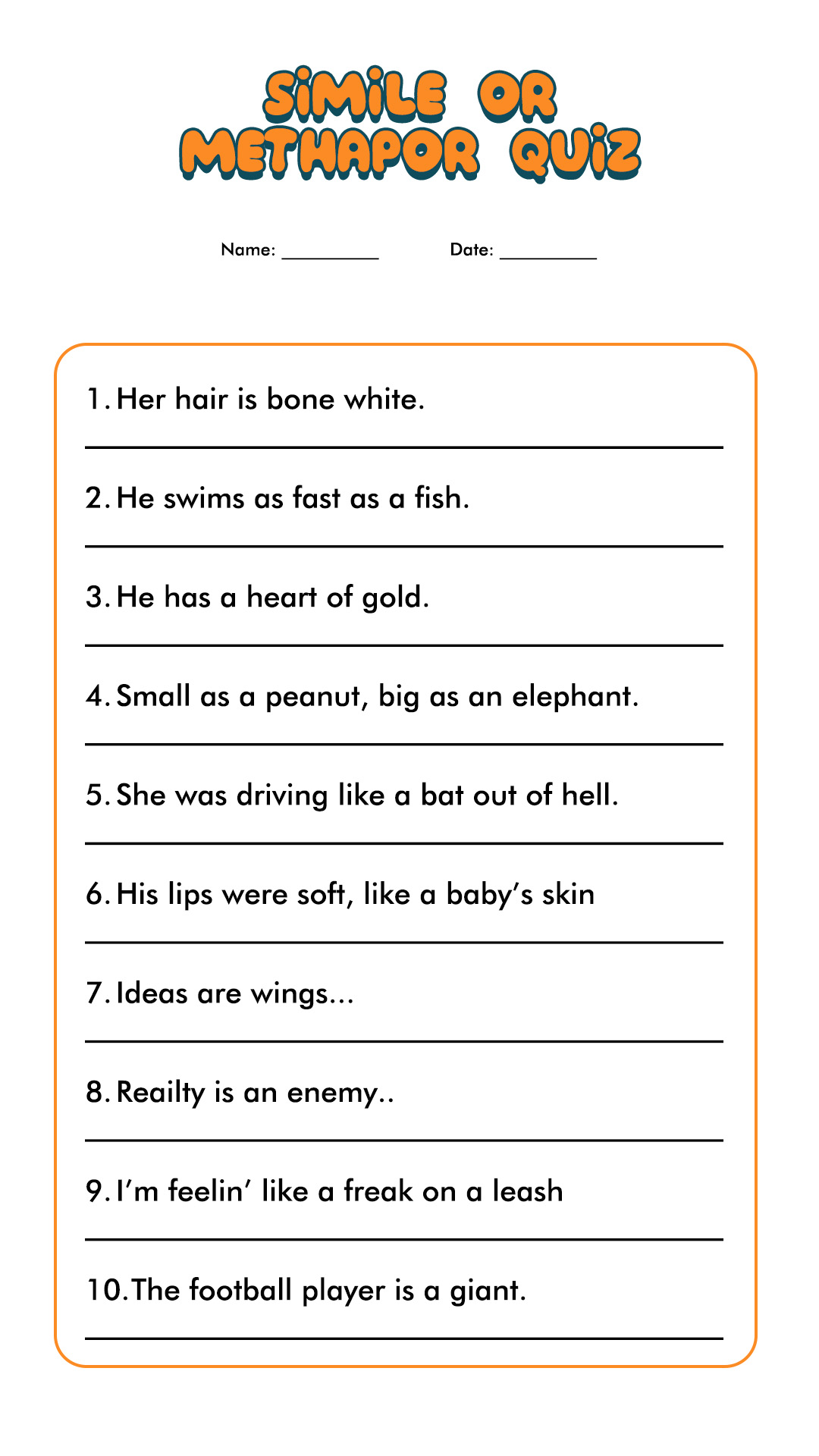
Printable Simile And Metaphor Worksheets Preschool Coloring
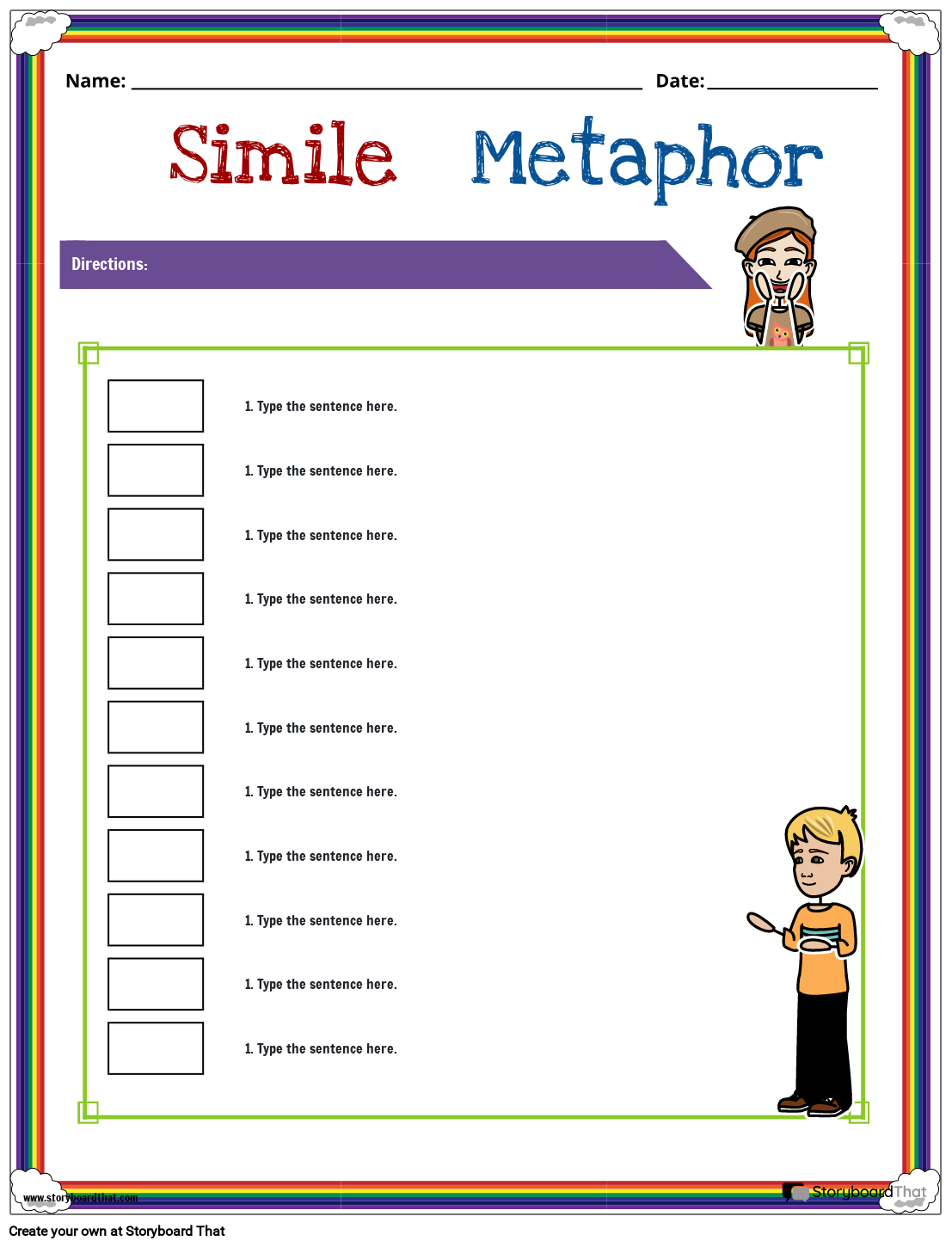
Simple Simile And Metaphor Worksheet Storyboard Worksheets Library